
Luciano Perondi
CR La tipografia è linguaggio o forma di pensiero? Tipografia e linguaggio coincidono oppure restano sistemi parzialmente incompatibili? Cosa significa per lei “scrivere”? Dove inizia la forma, dove finisce il contenuto? Che ruolo ha l’errore nel processo di scrittura? Cosa accade alla tipografia quando il contesto digitale ne assorbe la materialità ma ne moltiplica la plasticità? Dopo Sinsemie, la scrittura è ancora pensabile come pura codifica lineare, oppure è sempre più una dimensione spaziale, relazionale, ambientale? Cosa definisce per lei un “segno”? Dove finisce la forma e inizia il gesto? Che rapporto c’è tra scrittura e spazialità, al di fuori della pagina?
Richard Niessen
CR Is typography, in your view, more a language or a form of thought?
RN A bit of a lame answer, but it's a bit of both. It is, of course, a visual form in which spoken language is cast, or written language takes shape, and in that sense it plays a role in how that language is conveyed. But in the process of creating typography, an extra layer of thought does come into play: interpretation, but also the coincidences that arise in the form; the “material” itself also wants something.
CR Is the letter still a threshold between form and meaning?
RN I wouldn't call it a threshold, more like a floodgate or a corridor. The shape itself means nothing, of course: the shape of the letter A, well, apart from the fact that it was originally a drawing, is simply an abstract shape. But since we learned to read, we can no longer separate it from the meaning that has been given to it: an “a” is an “a” because it is an “a”. Of course, the shape of the letter “a” can still change, depending on the choice of font: is it friendly or distant, and what does that mean in combination with the text?
CR Your research has transformed typography into a symbolic, mythological, almost ritual device. What, for you, is the “imaginative” potential of the letter today?
RN I'm not sure exactly which research you're referring to, but in my work, the line between the sign, the symbol and the ornament is often blurred. They are all, in their own way, carriers of meaning and have a graphic form; it just depends on the role they are assigned. I find letters somewhat magical, and they are a very beautiful material to work with, precisely because they have a recognisable basis and a certain coherence, and people tend to seek meaning in them. For the Palace of Typographic Masonry, I design a sign for each space, which is created from the composition of the index cards on which the source collection is described (see image). It is a sign, but also a map (because the organisation of the collection becomes visible in it). At the same time, it is also the identity of the project. What I see as the imaginative power of the letter is that its form can inspire us to action or reverie.
CR How do you imagine an alphabet that does not yet exist — as speculation, or as an archaeological excavation?
RN I love that, like Thomas Moore's utopian alphabet. But also, for example, Ithkuil (https://en.wikipedia.org/wiki/Ithkuil), which investigates the functioning of human language. Or as in Arrival, which establishes a link between writing and the perception of time. I find that incredibly interesting.
CR In your experience, what is the relationship between writing and gesture? Between visual construction and movement?
RNTo be completely honest, I have never really looked into it. I am someone who “builds” and constructs a lot; I love structures, and I distrust my own handwriting. But writing is, of course, inextricably linked to movement, to gestures. However, I cannot say much about that.
Alex Balgiu
CR What does “writing” mean to you? Where does content end and form begin?
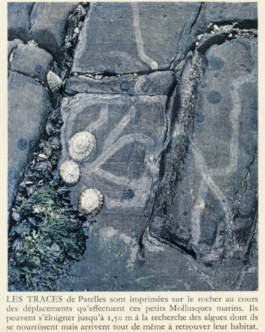
AB Limpets tracing their ways on a rock — from Niko Tinbergen’s “Le comportement animal” (Paris: Time-Life, 1977)
CR Have you ever thought of typography as a gesture?
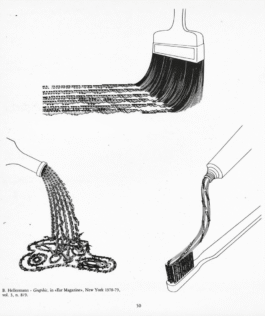
AB *Graphic* compositions by B. Hellermann from “Spartito Preso” (Firenze: Vallecchi, 1981)
CR What happens to meaning when form takes over?
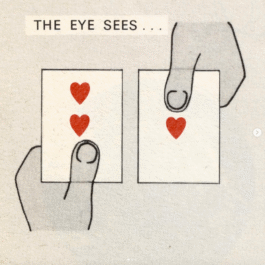
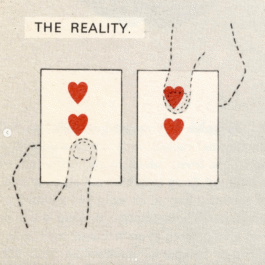
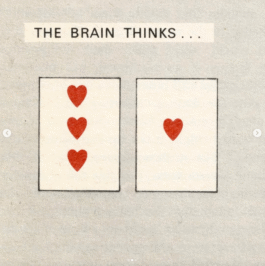
AB The eye, the brain and the hearts, from Edi Lanners' "Illusions" (Thames & Hudosn, 1977)
CR Do you think writing today can be considered a performance? An embodied, unstable gesture?
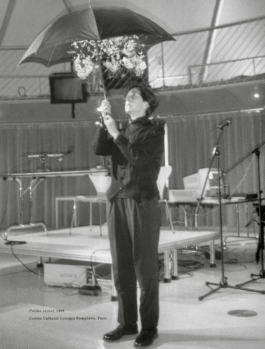
AB A light, small, portable, usually circular cover for exposure to language Esther Ferrer’s “Poema visual” (1999)
CR What is the role of the unsaid, of blank space, of emptiness in the texts you create or observe?
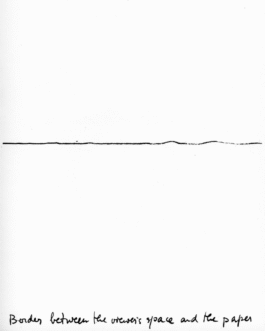
AB Betweening with Luis Camnitzer from Guy Schraenen’s “Out of Print: An Archive as Artistic Concept” (Bremen: Museum Weserburg, 2001)
CR In what way can a glyph become a field of research, an epistemic subject?
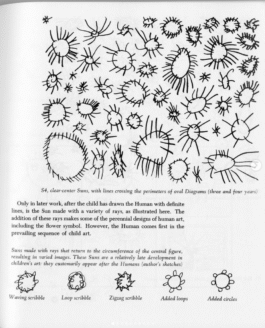
AB Waving scribble, loop scribble, zigzag scribble, added loops, added circles from Rhoda Kellogg’s “Analyzing Children’s Art” (Palo Alto, CA: Mayfield Publishing Company, 1970)
Luciano Perondi
CR La tipografia è linguaggio o forma di pensiero? Tipografia e linguaggio coincidono oppure restano sistemi parzialmente incompatibili? Cosa significa per lei “scrivere”? Dove inizia la forma, dove finisce il contenuto? Che ruolo ha l’errore nel processo di scrittura? Cosa accade alla tipografia quando il contesto digitale ne assorbe la materialità ma ne moltiplica la plasticità? Dopo Sinsemie, la scrittura è ancora pensabile come pura codifica lineare, oppure è sempre più una dimensione spaziale, relazionale, ambientale? Cosa definisce per lei un “segno”? Dove finisce la forma e inizia il gesto? Che rapporto c’è tra scrittura e spazialità, al di fuori della pagina?
Richard Niessen
CR Is typography, in your view, more a language or a form of thought?
RN A bit of a lame answer, but it's a bit of both. It is, of course, a visual form in which spoken language is cast, or written language takes shape, and in that sense it plays a role in how that language is conveyed. But in the process of creating typography, an extra layer of thought does come into play: interpretation, but also the coincidences that arise in the form; the “material” itself also wants something.
CR Is the letter still a threshold between form and meaning?
RN I wouldn't call it a threshold, more like a floodgate or a corridor. The shape itself means nothing, of course: the shape of the letter A, well, apart from the fact that it was originally a drawing, is simply an abstract shape. But since we learned to read, we can no longer separate it from the meaning that has been given to it: an “a” is an “a” because it is an “a”. Of course, the shape of the letter “a” can still change, depending on the choice of font: is it friendly or distant, and what does that mean in combination with the text?
CR Your research has transformed typography into a symbolic, mythological, almost ritual device. What, for you, is the “imaginative” potential of the letter today?
RN I'm not sure exactly which research you're referring to, but in my work, the line between the sign, the symbol and the ornament is often blurred. They are all, in their own way, carriers of meaning and have a graphic form; it just depends on the role they are assigned. I find letters somewhat magical, and they are a very beautiful material to work with, precisely because they have a recognisable basis and a certain coherence, and people tend to seek meaning in them. For the Palace of Typographic Masonry, I design a sign for each space, which is created from the composition of the index cards on which the source collection is described (see image). It is a sign, but also a map (because the organisation of the collection becomes visible in it). At the same time, it is also the identity of the project. What I see as the imaginative power of the letter is that its form can inspire us to action or reverie.
CR How do you imagine an alphabet that does not yet exist — as speculation, or as an archaeological excavation?
RN I love that, like Thomas Moore's utopian alphabet. But also, for example, Ithkuil (https://en.wikipedia.org/wiki/Ithkuil), which investigates the functioning of human language. Or as in Arrival, which establishes a link between writing and the perception of time. I find that incredibly interesting.
CR In your experience, what is the relationship between writing and gesture? Between visual construction and movement?
RNTo be completely honest, I have never really looked into it. I am someone who “builds” and constructs a lot; I love structures, and I distrust my own handwriting. But writing is, of course, inextricably linked to movement, to gestures. However, I cannot say much about that.
Alex Balgiu
CR What does “writing” mean to you? Where does content end and form begin?
AB Limpets tracing their ways on a rock — from Niko Tinbergen’s “Le comportement animal” (Paris: Time-Life, 1977)
CR Have you ever thought of typography as a gesture?
AB *Graphic* compositions by B. Hellermann from “Spartito Preso” (Firenze: Vallecchi, 1981)
CR What happens to meaning when form takes over?
AB The eye, the brain and the hearts, from Edi Lanners' "Illusions" (Thames & Hudosn, 1977)
CR Do you think writing today can be considered a performance? An embodied, unstable gesture?
AB A light, small, portable, usually circular cover for exposure to language Esther Ferrer’s “Poema visual” (1999)
CR What is the role of the unsaid, of blank space, of emptiness in the texts you create or observe?
AB Betweening with Luis Camnitzer from Guy Schraenen’s “Out of Print: An Archive as Artistic Concept” (Bremen: Museum Weserburg, 2001)
CR In what way can a glyph become a field of research, an epistemic subject?
AB Waving scribble, loop scribble, zigzag scribble, added loops, added circles from Rhoda Kellogg’s “Analyzing Children’s Art” (Palo Alto, CA: Mayfield Publishing Company, 1970)